Showing posts with label painting. Show all posts

Friday, August 30, 2024

ENDOMETRIA SPEAKS ENGLISH


It has been a long and adventurous challenge, but at last the English translation of my dark fantasy novel “Endometria” written and illustrated in 2007 is no more a fantasy. The eBook version including the illustrations of the first edition and new unreleased ones, the appendix with the backstory “The Veil of the Night” and several essays and notes is currently available on Amazon in Kindle format. Though, if you belong to those who still prefer to leaf through the rustling pages while smelling the fragrance of the freshly printed paper, don’t despair: the paperback version will be available shortly after. Having forgotten the years of the imprisonment by the Veil of Night, now Edel and Arnel reign on a new marquisate, far from the wars plaguing the realm of Lantaria. Despite their harmonious life, the epicenter of the chaos that is about to fall on the entire continent, is pulsating at the root of their love.

What’s the origin of the seed hidden inside the beak of the bird “franofelus”? Who are the acolytes of the Ancient Whisper? Why the monks of Garras have left their monastery to build new cathedrals in the city of Antalide? The ancient race of Aledani was really extinct along with their dark power? It will be up to Arnel to face, through his flesh, the hurricanes of memory in which the mystery of the “Eulatma children” is waiting to lash out.


Tuesday, October 4, 2022

NURSE BLIZZARD - Now in English

 The English edition of the sixth AFAN Alessandro Fantini’s novel “Nurse Blizzard” has been released. 

Available now in eBook and paperback on Kindle and Lulu stores.


 AFAN's LULU store:

 https://www.lulu.com/shop/alessandro-fantini/nurse-blizzard/ebook/product-7py6gk.html?page=1&pageSize=4

https://www.lulu.com/shop/alessandro-fantini/nurse-blizzard/paperback/product-2p2qzw.html?page=1&pageSize=4

Why still writing a novel in the “social media age”?

In this era of compulsive consumption of video and text fragments, I think the novel remains one of the few expressive forms, along with television series and videogames, capable of convincing people to immerse themselves for several hours in a row in a temporal and spatial flow of pure fantasy. What distinguishes it from other "entertainment" media is the fact it invites the readers to face their own interiority by letting them contribute to the evocation of a narrative and emotional world that doesn’t demean but enhances their imagination and sensitivity. Somehow I find its articulated unreality to be an excellent antidote to the chaotic unreality of the web.
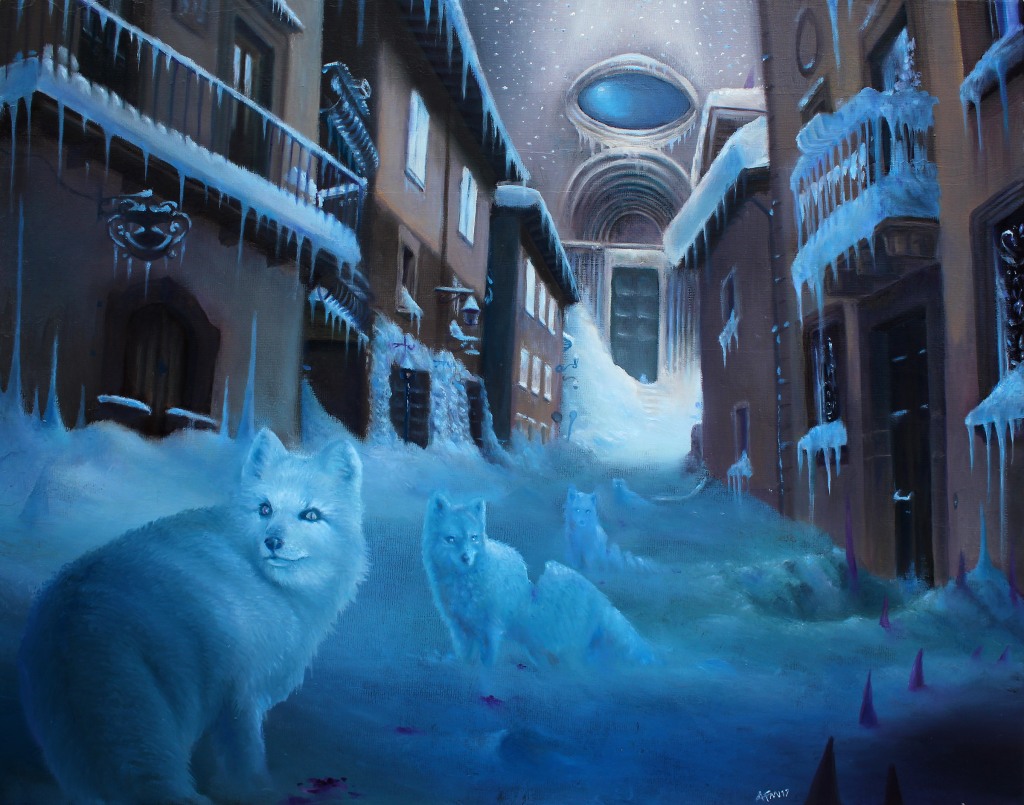
 

This image has an empty alt attribute; its file name is i-canti-dei-valkoi-afan17-.jpg 

What does the title “Balia Bufera/Nurse Blizzard” allude to?

Even before I started writing, I had a couple of titles in mind alluding to snow, to the theme of early childhood and to snowstorms also known as “blizzards”. It may be also because one of my most vivid and magical childhood memories is that of visiting a village among the Abruzzo mountains covered by almost a meter of snow by night, during the Christmas period. After completing the first chapter and having defined the plot, I realized that the personification of the Blizzard, assimilated to a nurse who nourishes and protects a new life, explained in two words, in both a metaphorical and a literal sense, the concepts around which the whole story revolved.

Who are the protagonists of the novel?

The story is mainly told in first person by Patrizio, an insecure 20-year-old raised by his maternal uncles from the age of three, when his mother decided to rebuild a family abroad, traumatized by his father's escape which took place a few months before his birth. Patrick never fully believed in Uncle Leonidas' version, according to which his father had shirked his parenting responsibilities, while his mother had already fallen in love with another man when she was pregnant. With no points of reference and true friends, once he graduates, Patrizio deludes himself that he can change his life by enrolling in a computer engineering course. But the inability to pay for his studies led him almost by chance to join Tonio and Fabiano, two young thieves for whose thefts he will lend himself as lookout, in the belief that's the best way to rapidly finance the course. However, the thrill of the criminal life will lead him to lose touch with reality. So Patrizio becomes aware of his alienation only when he ends up in prison and later in an isolated family home on a plateau. A place made even more mysterious by its proximity to Mount Crura, an apparently uninhabited village where he will meet a girl who, in turn, is confined to a physical and mental prison.
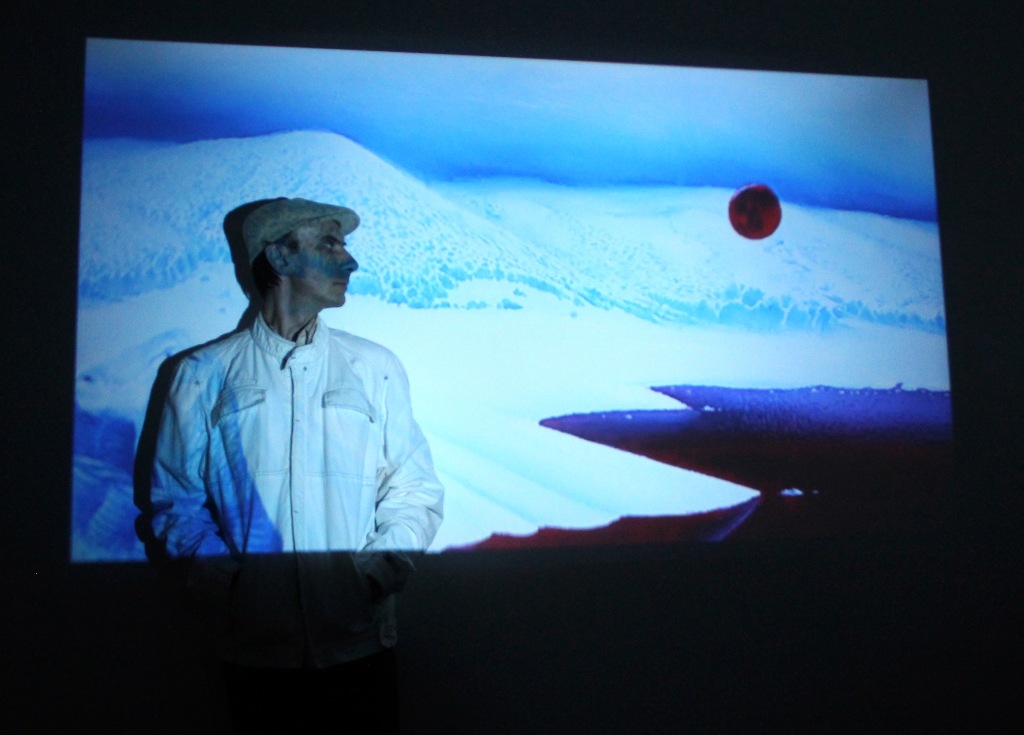
 

 This image has an empty alt attribute; its file name is luna-di-sangue-resized.jpg

Is it a thriller, a mystery, a fantasy or a horror?

When I start writing I never try to stay within the borders of a literary genre, nor I think about the ideal age of the readers. I usually plan a novel only when I have collected a series of images and ideas from whose association I feel it’s possible to derive an atmosphere and a tension so deep and effective to keep me glued to the keyboard in the same way I am convinced the reader will be captured by the finished book.

Who are the authors and the places that influenced the novel?

In addition to childhood memories of the snow-covered plateau of Quarto Santa Chiara in Abruzzo, the first images that spurred me to write "Nurse Blizzard" were the illustrations by the Dutch Rien Poortvliet, the author of the famous series of late ‘70 books on “Gnomes” created with Will Huygens. I have always thought those visions could express a dramatic and fateful quality if placed in a realistic and familiar context such as that of the winter of the Abruzzo Apennines. Even more so if imbued with the suggestions of weird stories of witchcraft by a Gothic author like Arthur Machen, whose short story "the White people", published in 1904, represented an important source of inspiration for the novel.
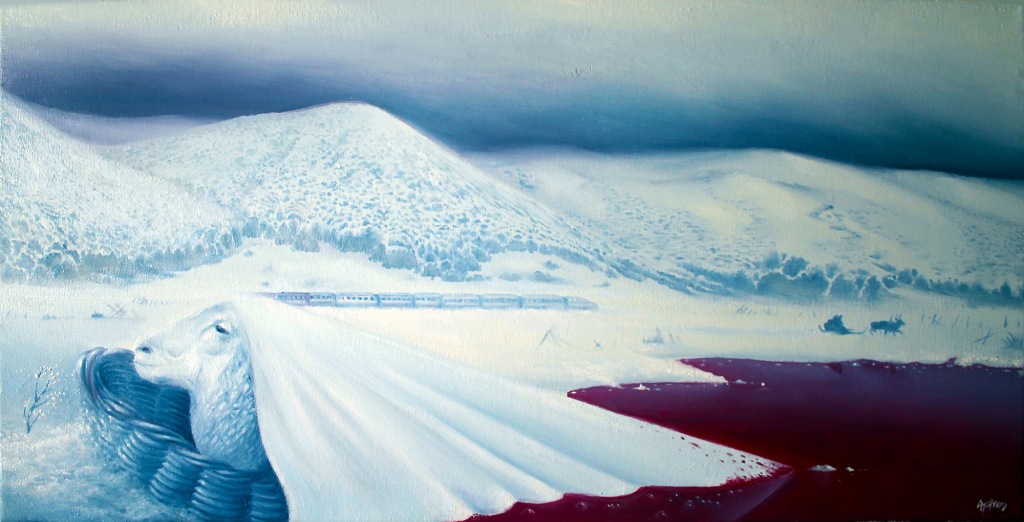
 

This image has an empty alt attribute; its file name is engramma-concept-art-per-balia-bufera-afan17resized2-1.jpg


What criteria did you follow in translating the novel from Italian?

The secret of a translation work is to be faithful to the original text by betraying it without being noticed. In this case, the process has been made a little more easy by the fact I’m also the author of the original novel written in Italian in 2017, therefore I've been more aware and confident into applying the (more or less) slight tweaks needed to render the proper English equivalent of the slang and idiomatic expressions of the characters, thus preserving the prose pace and the onomatopoeic suggestions so essential to the peculiar mood of the story. Even though being able to exert so much creative freedom on every aspects of a book, is the “self publishing” feature I appreciate the most, translating my novels hasn’t just the aim to broaden the pool of my readers, but to hopefully gain also the attention of publishers who don’t believe (like many in Italy) that only soccer players, influencers, actors and TV showmen are worthy of being “published”.

Is the story of Balia Bufera limited to the literary form?

The story of Patrizio, the family home of Santa Pelva, Monte Crura and its enigmatic inhabitants is the final estuary of a large number of visual and literary tributaries, so it is by no means excluded that it may extend or continue in other artistic codes, first of all the cinema one. While writing the novel I’ve created a screenplay conceived according to the locations of Pescostanzo town and the nearby plateau of Quarto Santa Chiara, a method that allowed me both to consolidate the realism of the novel and to lay the foundations for a second life of the novel. Which is one of the crucial meanings hidden in the novel's title and plot. Because everyone needs a second chance after having been at the mercy of the storm, or better said, the “blizzard”.


Thursday, April 14, 2022

The Vigil of Mriya


                                                      AFAN Alessandro Fantini
                                                            The Vigil of Mriya
                                                   Oil on canvas, 39x39 cm. (2022)


Sunday, December 5, 2021

Tuesday, October 19, 2021

Thursday, December 31, 2020

Saturday, April 25, 2020

Monday, January 20, 2020

Stabat Onusta Aestas

Directed, edited and performed by AFan Alessandro Fantini 

Music by AFan Alessandro Fantini 


Featured in the international collective documentary "A Living tree means a living planet" directed by Khalid Mokadmine co-produced by Geri Lynn Matthews 

 Best documentary at Calcutta film Festival 2019
 Cult Critic Movie Awards Outstanding achievement 2019 
Rome "Prisma Independent Film Awards" finalist 2019

Monday, November 11, 2019

Nystagma


AFAN Alessandro Fantini

Nystagma (rhyme of the stranded bride)

Oil on canvas, 30x55 cm. (2019)


Sunday, October 6, 2019

A living tree means a living planet


 "A living tree means a living planet" is a collective international documentary conceived and directed by Khalid Mokadmine, a young filmmaker from Rabat. In April he reached me out online inviting me to contribute with a one minute video to his ongoing project about the relationship between humans and trees.

He had already invited several filmmakers from all over the world, each one representing a different country by telling a different visual story, and he still wasn't able to find a director from Italy available to shoot his own segment. As soon as he discovered I'm also a painter, he proposed me to figure out a way to feature one of my painting in my video. Trees have provided humans with the primary means of survival, therefore I thought it was essential to show how they can still be a precious "motherly" source of life for my own creations and (hopefully) the spirit of the humans inhabiting my country.

Thursday, September 12, 2019

Saturday, July 6, 2019

Albuginea

  AFAN Alessandro Fantini
Albuginea
The Dissing Fame
Oil on canvas, 50x70 cm. (2019)


Thursday, May 2, 2019

Leonardo or the irreplaceable sequence


Although I find it stingy to establish hierarchies when it comes to Art, I would not hesitate to put the whole human and creative story of Leonardo da Vinci at the top of my "pantheon".

Indelible is the memory of that huge tome dedicated to his work I received as a Christmas present in 1986. It wasn’t  the paintings, drawings or codes written with specular handwriting, that immediately impressed me, but the superhuman effort, largely disregarded, that Leonardo had accomplished throughout his life in tracing his intimate cosmogony, made even more heroic and romantic by  the state of draft of many of his most ambitious visions.


Later, I was fascinated by how that sense of sublime incompleteness, which found an admirable representation in the use of chiaroscuro, was rooted in biographical experience, reverberating in the enigma of his sexual identity. It was especially in the morphological whims of his drawings of storms, anatomical sections, battles and caricatures that I identified the germ of what would become my passion for graphic fantasies and visual inventions so familiar even to the painting of Hieronymus Bosch, Pieter Bruegel and William Kurelek. In the same period, I found that calligraphic wit and colour mastery in the illustrations soaked with fairy-tale realism dedicated to the life of the Gnomes by the Dutch Rien Poortvliet, an artist who should be counted among the greatest figurative artists of the twentieth century. It was along this path that I finally reached the reign of Freudian fetishes, delirious hyperrealism and atmospheric compressions by Salvador Dali, galvanized as well by Leonardo and Bosch in the gestation of his stylistic code. A deoxyribonucleic chain of which Leonardo will always remain the most irreplaceable and acid "sequence".

Thursday, February 28, 2019

Tuesday, February 5, 2019

Wednesday, January 23, 2019

Seeking absolutley nothing (Death and life of Salvador Dali)

Figueres 11-5-1904
Figueres 23-1-1989
Valle de la Sangre 23-1-2019


During the winter of 1992 I found myself walking in front of an open-air bookshop by the seafront of Pescara. I was looking for a book about cats. On the shelf above the volumes dedicated to felines, I saw a cover in which a bald man seemed to look for something at his feet, standing against a wide semi-desert landscape whose perspective receded to the sea horizon. It was the Salvador Dali's painting "The Pharmacist of Ampurdan seeking absolutely nothing”. And that was the cover of one of the first monographs published after his death. By a meaningful coincidence, someone had recently created a chalk fresco copy of Dali's "Corpus Hypercubicus" on the near square dominated by the Pietro Cascella's fountain "The ship". Until then I didn’t know so much about him. At 7 I just read a brief bio in an old book while stuck in bed for recovering from a fever. In the same period, I glanced at a framed print of “Woman with a head of roses” in the dim light of a room in my maternal uncle’s house. I felt there was something familiar and ominous in the mood of that image, as if it was a slide flickering from an age (not a different life) I lived prior to my childhood. That archaic feeling haunted my infancy, making me enjoy more the mysteries of places and books evoking solitude and distant past than the company of my playmates. Sometime when I was sick and alone in my bed leafing through artbooks, my cat stared at me from behind the glass of the French window. Only that non-human presence was able to share and preserve the magic of that solitude.
Somehow it was fateful that, while looking for a manual about cats I ended up buying one about the quest for nothing.
That enthralling Nothing was waiting to be populated by the hidden fauna swarming in the sea of Time in front of me.

Saturday, December 22, 2018

Will the night ever fall down?


 AFAN Alessandro Fantini 
- Will the night ever fall down?
oil on canvas, 25x35 cm. (2018)